Toxic App
Because vocabulary is power.
- Year
- 2025
- Client
- Self-initiated
- Role
- Design Lead & Initiator
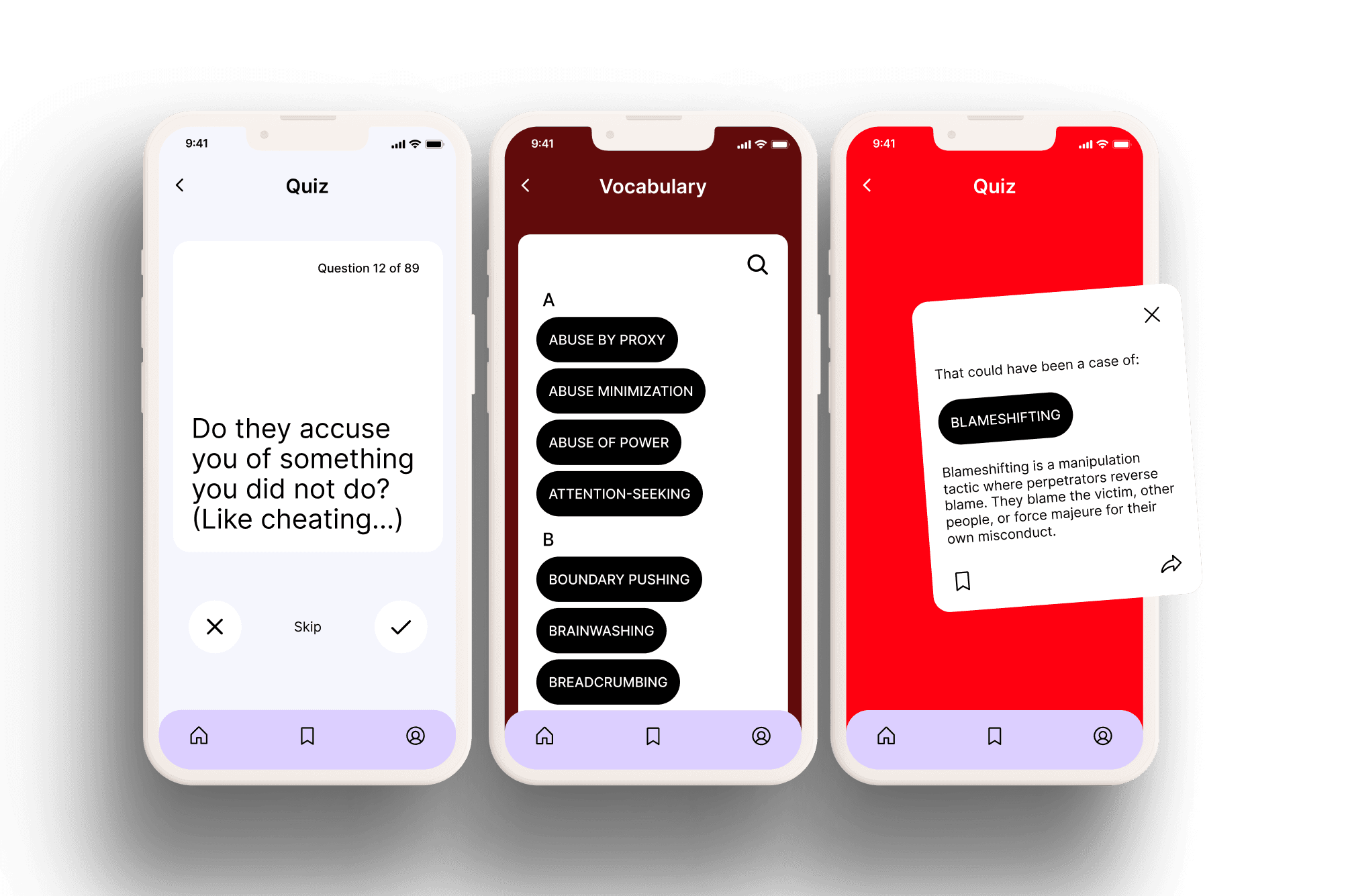
In 2025 I decided to create an app I wish had existed 20 years ago. Toxic was born as an exercise, a great excuse to learn new skills, while also making an impact in someone else's life through knowledge, language, and awareness about abusive relationships.
Context
After a while cooking this idea in my head, I decided to partner with two wonderfully talented colleagues so that we would have all the capabilities needed to turn this project into reality. The gap was clear: there was no simple, accessible educational tool to help people understand and name abusive relationship dynamics.
Role
Design Lead and Initiator. I conceived the product, assembled the team, led the design direction, and own the overall product vision. Working alongside Alice Borner (Engineer) and Lisa Jureczko (Content Expert).
Constraints
This is a self-funded, self-initiated project built alongside other work commitments. The subject matter required careful, responsible framing, the app must be educational without being diagnostic, empowering without being prescriptive. Every content and design decision carried ethical weight.
Approach
We believe that information is power and that vocabulary is key to transformation. The product design focuses on accessibility and simplicity: clear definitions of abusive patterns, contextual questions to help people recognise behaviours, and reflection tools. The experience is deliberately calm and non-alarming, the opposite of what users might expect from a topic this heavy.
Key Decisions
The single most important design decision was the framing: this app is not a diagnostic tool and does not replace therapy, counselling, or professional help. That boundary shapes every word and every interaction. We also chose to lead with education over intervention, giving people language before asking them to act.
The visual language had to hold a difficult balance: serious enough to honour the subject matter, approachable enough that someone in a vulnerable moment would not be overwhelmed. We avoided clinical aesthetics and crisis-hotline conventions. Instead, the design is warm, typographic, and calm, prioritising legibility and emotional safety above all. Accessibility was non-negotiable from day one.
Outcomes
Product designed and developed, launching Q2 2026
Team of 3: designer, engineer, and content expert. Assembled and aligned.
Core feature set defined: definitions, recognition questions, and reflection tools
Accessibility-first design system built for the product
Learnings
Designing for vulnerable users requires a different kind of restraint, every word and every colour choice carries responsibility.
Initiating a 0→1 project without a client brief is liberating and terrifying in equal measure. The constraints you set for yourself are the hardest to hold.
Teaching is the best way to learn. Building Toxic taught me more about interaction design, product strategy, and ethical design than any client project.